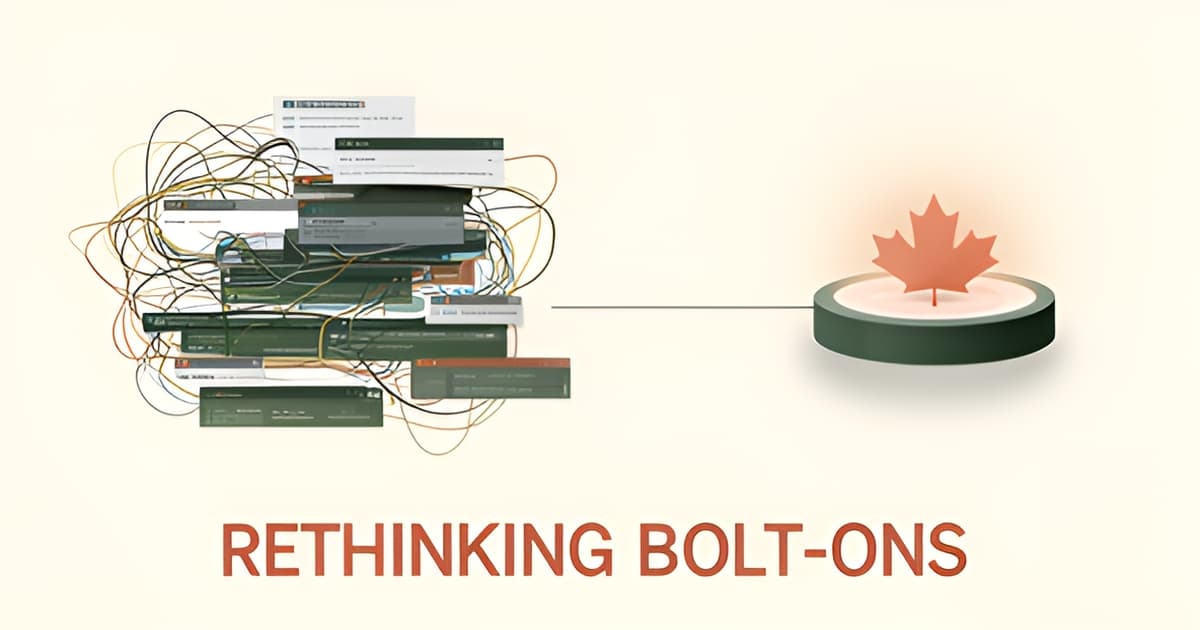
Ask a Canadian real estate agent what they pay for AI follow-up and you'll usually get a number, followed by a shrug. The number is often higher than they expected. The shrug is because they're not entirely sure what they're paying for, or who's actually running it. That's the state of a category that has grown quickly over the past few years: AI-powered lead nurture and response tools marketed directly to individual agents and small teams. The pitch is consistent across vendors. Your leads get answered in seconds, day or night, by an AI that sounds like you. The problem is what sits underneath that pitch. Most of these products are bolt-ons. They attach to a CRM you already pay for, they're priced in US dollars, and once the invoice clears, the job of making them work falls on you. A Halifax-based company called Realtix, owned by AIQ Labs, is betting that the structure itself is the problem. Its platform, built specifically for Canadian agents and teams of two to ten, sells the outcome rather than the tooling: a done-for-you system that runs the agent's entire online presence, with the agent's only login being their own website. Whether that model holds up under scrutiny is worth a closer look, because the math and the operating burden tell most of the story.
Key points
- AI nurture products aimed at agents typically run $395 to $1,000+ USD per month as bolt-ons to a CRM the agent already pays for
- None of the major bolt-on products include a personal branded website as the core offering, and none run a done-for-you delivery model
- A bundled Canadian alternative prices at $697 CAD per month plus a $1,997 CAD one-time build, with the agent's only login being their own website
- Compliance shapes the category: CASL email rules, CRTC call rules, MLS/CREA virtual staging disclosure, and a hard ban on referral-fee-at-closing lead models for non-brokerages
- The real comparison isn't feature lists, it's who operates the system: the agent or the vendor
The dominant AI-nurture products sold to agents, including Ylopo, Structurely, Lofty, and Follow Up Boss add-ons, typically run $395 to $1,000+ USD per month. At recent exchange rates, that's roughly $540 to $1,370 CAD before tax, every month, for a component. The word component matters. These products don't include the agent's website. They don't include the CRM they plug into. They don't include review generation, showing scheduling, or past-client nurture. An agent running a typical stack might pay for a website builder, a CRM, an AI nurture add-on, a scheduling tool, and a review platform, then spend unpaid evenings wiring them together and keeping them from drifting apart. Here's an illustrative example, clearly marked as such and not a claim about any specific agent's results: an agent paying $150 USD for a website subscription, $500 USD for a CRM with seats, and $600 USD for an AI nurture bolt-on is spending about $1,250 USD monthly, or roughly $1,700 CAD. That's before the hours spent on setup, integrations, and troubleshooting. For a solo agent, those hours come directly out of prospecting time. The pricing alone doesn't settle anything. Vendors at the high end would argue their platforms do more. But it does reframe the question agents should be asking: am I buying software, or am I buying a working system?
There's a curious gap in the bolt-on category. None of the major AI-nurture products sell a personal branded website as the core product. The agent's website, the one asset that should anchor their local search presence and give every lead somewhere to land, is treated as someone else's problem. Realtix takes the opposite position. The personal SEO website is the centre of its bundle, built on the agent's own domain with city and neighbourhood pages written with genuine local substance rather than city-name swaps. Around it sit five other systems: AI follow-up with a voice agent and chat bot that answer inquiries in under 60 seconds around the clock, a listing media studio with disclosed virtual staging and MLS-ready descriptions, review automation, showing scheduling with two-way calendar sync, and consent-based sphere nurture for past clients. The published price is $697 CAD per month for the full bundle, plus a one-time site build of $1,997 CAD. Add-ons are available: an AI receptionist that answers the agent's actual phone line at $279 CAD monthly, and a managed social content program at $419 CAD monthly. Paid leads are sold at a flat advertising fee per lead or per territory, quoted by market. Notably absent: MLS or IDX integration and property search feeds. Realtix has drawn a deliberate line around being a presence-and-growth layer rather than a listings platform, which keeps scope honest even if some agents will need to source those functions elsewhere.
The delivery model may matter more than the price. Realtix builds the site in roughly two weeks, trains the AI on the agent's listings and service standards, seeds the content programs, and then operates everything on an ongoing basis. The agent gets a monthly performance report covering leads answered, bookings, reviews, and touches. This reframes the purchase. The industry norm is software the agent must operate, which sounds fine in a demo and falls apart in a busy month. Most agents didn't get into the business to manage integrations. The done-for-you pitch is blunt about that: the agent shows houses, the system runs the presence. There's a fair counterargument. Handing operations to a vendor means trusting their judgement on your brand voice, your follow-up standards, and your review responses. Agents who like tinkering with their stack will find the model constraining. But for the target customer, a time-poor solo agent or a small team without a marketing coordinator, the trade is straightforward: give up control of the plumbing, keep the outcome.
Canada's regulatory environment draws harder boundaries than many agents realize, and any vendor in this space has to work inside them. Email programs must comply with CASL, and outbound calling falls under CRTC rules. Consent-based programs with instant opt-out are the workable standard. Virtual staging must be disclosed per MLS and CREA rules, with the underlying architecture never altered and watermarking handled properly. Realtix builds all of this into its systems rather than leaving it to the agent to remember. The sharpest line involves lead pricing. Realtix is not a licensed brokerage, which makes referral-fee-at-closing models illegal for it. Leads are always sold at a flat fee, never as commission shares or pay-at-closing arrangements. Agents evaluating any lead source should ask the same question of every vendor: how exactly is this priced, and does the answer survive contact with brokerage law? A flat fee is the only structure a non-brokerage can offer, and any vendor suggesting otherwise is a red flag.
One quieter differentiator deserves mention: the currency. Canadian agents have spent years paying US-dollar subscriptions and absorbing exchange-rate swings on invoices that never mentioned Canada at all. Realtix prices in Canadian dollars and serves agents coast to coast, from Halifax to Vancouver, with niches ranging from first-time buyers and condos to waterfront, rural, pre-construction, military relocations, and estate sales. That's not a feature in the traditional sense. But for a solo agent comparing a $697 CAD all-in bundle against a $1,000 USD bolt-on that still needs three other subscriptions to function, currency is part of the math, and the math is the point.
The AI nurture category isn't going away, and the bolt-on products in it do real work for agents who have the time and appetite to operate them. But the category's default structure, US-priced components the agent assembles themselves, was built for a buyer who doesn't exist in great numbers: the agent with spare evenings and an integration hobby. The done-for-you model that Realtix is pushing, one bundled system operated by the vendor at $697 CAD per month with published pricing and compliance built in, asks a different question. Not which tool has the longest feature list, but who is actually going to run this thing. For most working agents, that's the question worth answering first.